



NEWS

döner-sorten

Doner varieties at a glance: from sandwich döner to pizza döner – all formats explained

Döner has become a true all-round dish: sometimes in crispy bread, sometimes as a big plate with sides, sometimes as a handy dürüm for on the go, or even as a creative pizza variation. Depending on how it’s served, it works just as well as a quick snack in your break as it does as a cosy family meal. In this article, we’ll take a closer look at the most important döner types and their presentation formats.

Why is döner presentation so important?

First impression: how looks influence taste

Whether at home, at a takeaway or in a restaurant: before the first bite reaches your mouth, your eyes are eating too. Good döner presentation makes every type of döner instantly appetising, makes the product look higher quality and helps to better judge portion sizes and ingredients.

Which döner type is suitable for whom?

Different doner varieties often cater to different needs:

  • Children & light eaters: smaller sandwiches or half portions

  • Big eaters: plate döner, XL dürüm or family platters

  • Snack lovers & to-go: box döner, dürüm, döner bowl

  • Foodies & trend fans: pizza döner, pide with döner meat, lahmacun with döner meat

Classics in bread: sandwich döner & tombik döner

tk-döner

Sandwich döner in flatbread as the all-rounder

The classic sandwich döner in flatbread is the standard version of döner for many people. This variation combines slightly crispy bread on the outside and soft inside with finely sliced döner meat, salad, tomatoes, onions, optionally red cabbage and various sauces (garlic, yoghurt, spicy).

Visually, a sandwich döner looks especially appealing when the bread isn’t overloaded, the meat remains visible and the fresh vegetables add colourful accents.

Tombik döner: soft bun, lots of filling

Tombik döner is served in a round, rather soft bun. With its compact, juicy shape it’s ideal for anyone who likes plenty of filling with relatively little bread. It’s also easy to hold in one hand. With a clean cut in the middle and a clearly visible filling, a tombik döner almost looks like a “burger filled with döner meat” – which makes it perfect for photos and social media.

Which bread types are suitable for döner?

For a successful döner presentation in bread, the flatbread should be nicely browned and appetising. A tombik bun should look fresh and not too dry. Sesame or black cumin seeds on the crust can optionally add an extra oriental touch.

Handy & popular: dürüm döner and other wrap variations

dürüm döner

Dürüm döner in thin flatbread: ideal for on the go

Dürüm döner is served in a thin yufka or wrap flatbread. It’s particularly handy, easy to roll, offers less bread but often lots of filling and is perfect for on the go, in the car or on your lunch break.

XL dürüm, yufka & co.: the differences

A standard dürüm has a normal flatbread diameter with a medium filling. The XL dürüm or yufka version with a larger flatbread promises more meat and more salad. Half a dürüm, on the other hand, is particularly suitable for children or for anyone who just wants a small snack.

The more evenly meat and vegetables are distributed, the more attractive the cross-section looks when cut.

How to roll a dürüm neatly and present it nicely

To turn a simple dürüm döner into a visual eye-catcher, you should first spread the sauce thinly, then place the meat and salad in the middle, fold in the sides slightly, roll it up tightly, cut it diagonally in the middle and serve it with the cut surface facing upwards.

Döner on a plate: plate döner, İskender-style & family platter

döner-sorten


Classic plate döner with sides

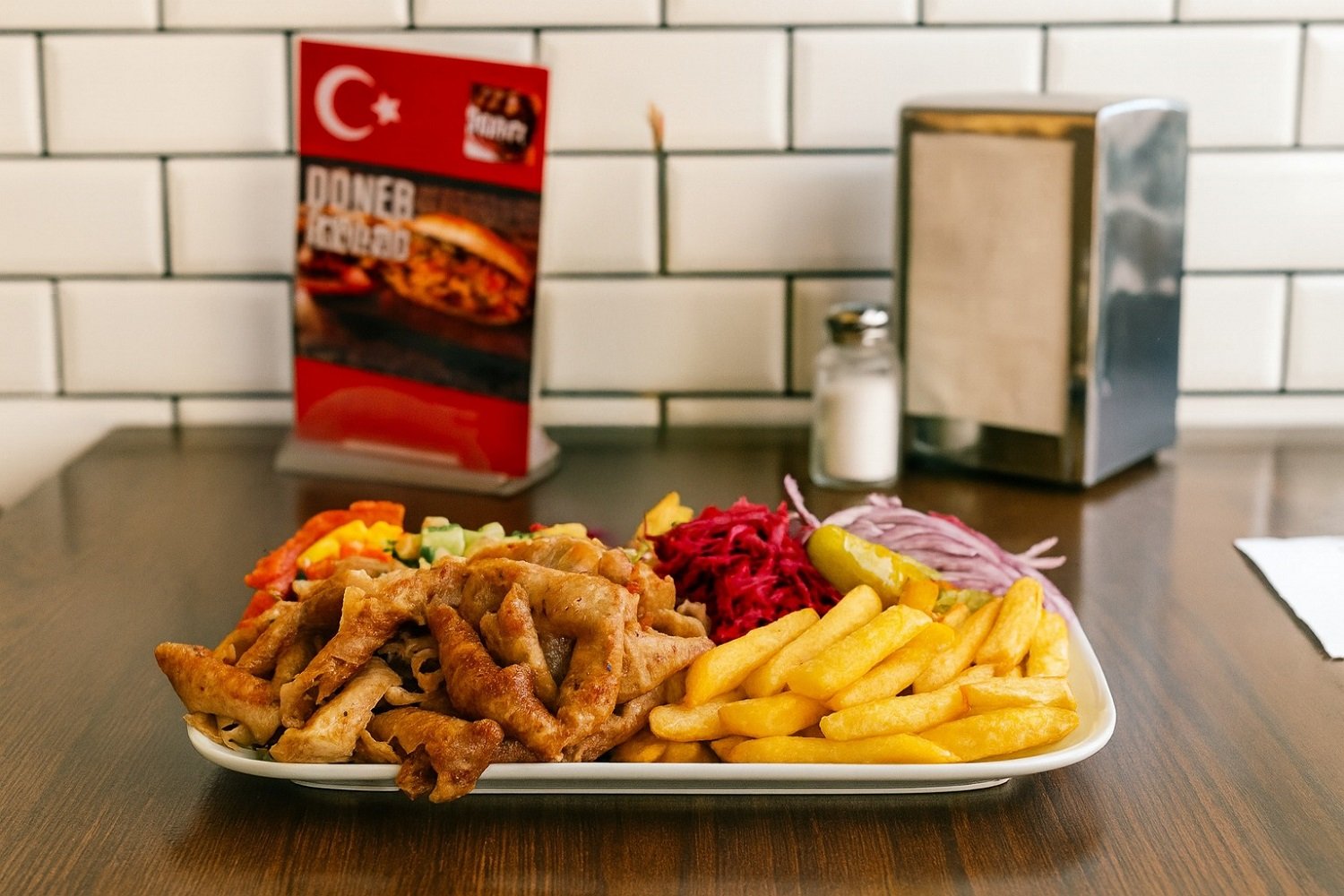
With a classic plate döner, the visual impression is crucial. The meat is placed in the centre or slightly to one side. Rice, fries and salad are arranged separately and neatly. The sauce is applied deliberately, not just poured all over. This makes the plate look tidy, high quality and instantly more appetising.

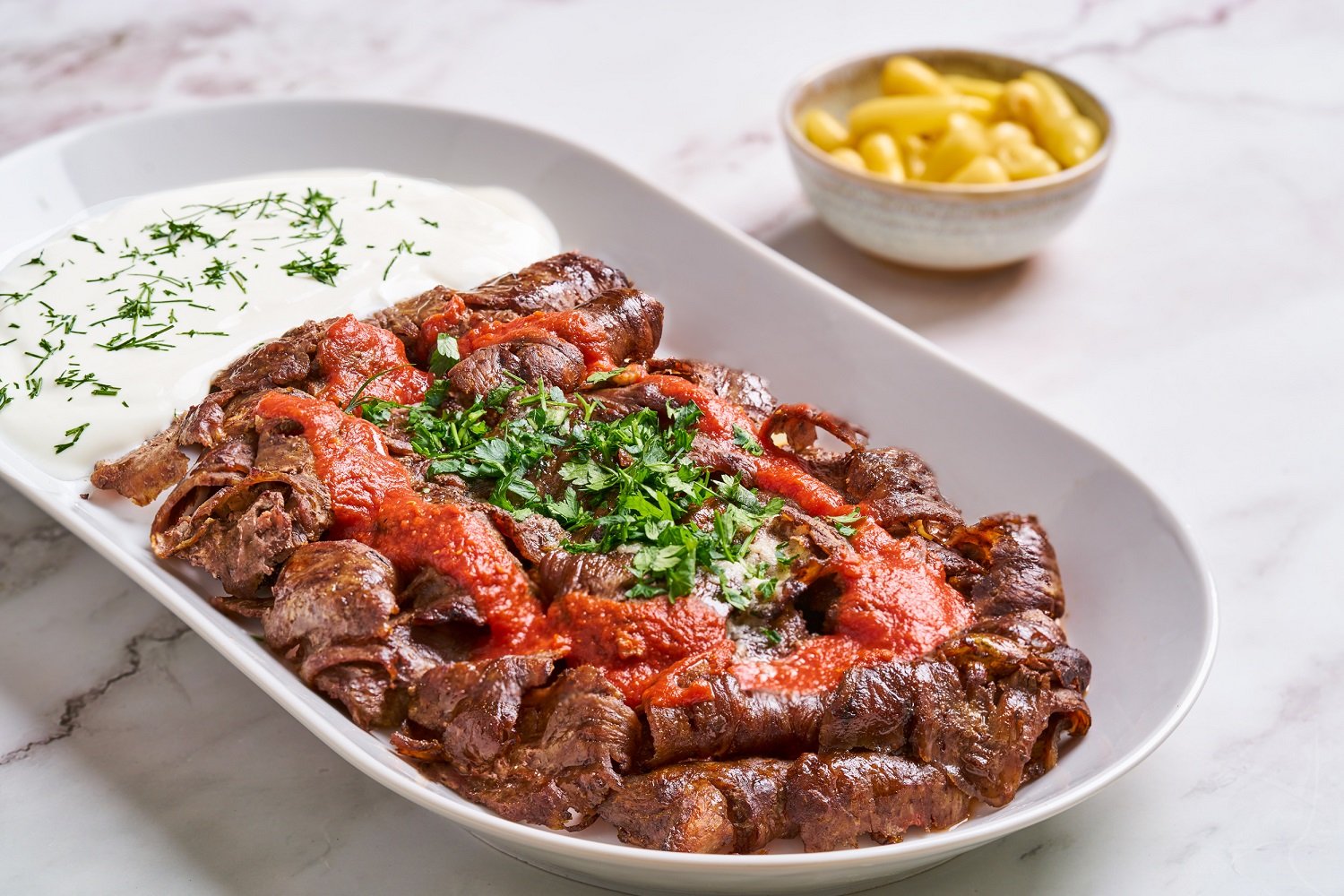
Iskender-style: döner with sauce and yoghurt

Inspired by Iskender kebab, döner meat is served on bread cubes with tomato sauce, a rim of yoghurt and often some melted butter on top. The presentation lives from the contrasts: red of the sauce, white of the yoghurt, brown of the meat. Arranged correctly, this plate looks very refined.

Family platter & sharing variations

For several people, large platters with döner meat, sides and salads are ideal. This is a “build-it-yourself concept” where everyone fills their own sandwich or dürüm. Visually, large platters impress with sorted zones (meat, salad, sides) and decorative elements such as pickled peppers, lemon slices and herbs.

To-go & street food: box döner, döner box with fries & bowls

Box döner as a quick meal

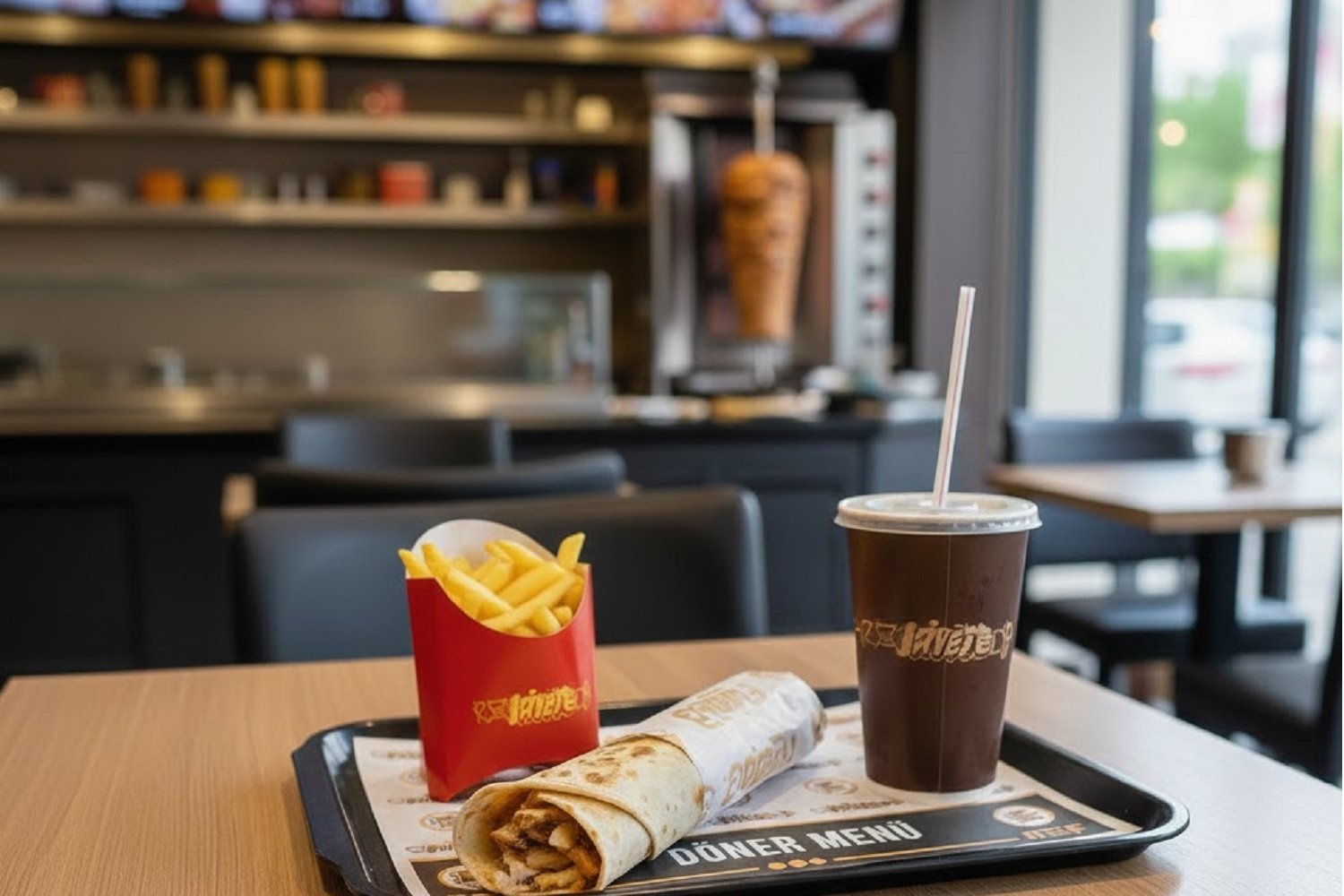
Box döner is usually served in a cardboard or plastic box. This makes it ideal for quick eating on the go and less messy than a sandwich. A box döner is often mixed with meat + salad + sauce in one box. Visually, you can score with clear layers, e.g. salad at the bottom, meat on top, sauces lightly drizzled over.

Box döner with fries and box döner with rice are also popular. Here it looks especially appetising if the fries stay crispy and don’t completely drown in sauce. The rice shouldn’t clump but lie loosely, and the meat belongs on top instead of disappearing underneath.

Döner bowls: modern bowl formats

Döner bowls follow the popular bowl trend: on a base of rice or bulgur, you have döner meat, salad, vegetables and sauce. They are usually divided into clearly separated, colourful segments. This looks particularly photogenic and appeals to anyone who enjoys modern and rather “lighter” döner variations.

Creative & modern: pizza döner and other trend formats

Pizza döner: pizza dough with döner meat

With pizza döner, pizza and döner meet directly: on a pizza dough base you first have sauce, cheese and döner meat; after baking, the whole thing is often topped with fresh salad.

The presentation thrives on a crispy crust, visible strips of meat and fresh pops of colour from salad, tomatoes and red onions.

Pide with döner meat, döner lahmacun & fusion ideas

Other creative döner types include:

  • Pide with döner meat: boat-shaped flatbread topped with cheese, döner meat and vegetables

  • Döner lahmacun: thin dough with minced meat topping, later filled with döner meat and salad

  • Wrap burger with döner: a combination of burger look and döner filling

These döner types are especially popular with younger target groups and social media fans.

Sides, sauces & garnish: how to turn every döner plate into an eye-catcher

döner teller

Arranging typical döner sides correctly

Popular sides include rice, bulgur or fries. There’s also mixed salad, pickled peppers, cucumbers and onions.

Döner sides look particularly neat when they are arranged in separate sections on the plate rather than “mixed together randomly”. On top of that, they should harmonise in colour (e.g. red cabbage next to light salad).

Sauces, herbs, onions & peppers

Sauces can have a big visual impact when they’re applied in fine lines or dots. If yoghurt, garlic and hot sauce are additionally placed on the plate in small, separate dollops, the plate looks even more structured and appetising. Fresh herbs (parsley), onion rings and peppers function as decoration and seasoning extras at the same time.

Extras for children’s portions and “lighter” döner

  • smaller buns or half dürüm

  • more salad, less meat or sauce

  • child-friendly presentation (e.g. faces made out of vegetables)

Matching döner types for different occasions

Which döner fits which level of hunger?

  • Quick snack: dürüm, box döner, small sandwich döner

  • Big appetite: plate döner, XL dürüm, family platter

  • Trend & variety: pizza döner, döner bowl, fusion formats